Protect the build schedule.
- Catch issues in minutes, before they turn into stop-work disputes.
- Avoid costly remediation with a clear, pre-agreed fix process.
- Build a track record of kept commitments for your next project.

Real-time proof that land access commitments are kept, cutting costly delays between contract, site access and energisation.
Australia must triple its generation and storage capacity by 2050. In 2025 it committed only about a third of the new wind and solar needed. Social licence keeps coming up as a cause of critical delays.
A gate left open, a missed notification, a complaint with no clear owner. Without visibility and clear responsibility, a small incident becomes a dispute, and a dispute becomes a delay.
OBLIgate builds trust and accelerates builds through real-time alerts and remediation. From contract to energisation, the new standard protects developers from costly remediation and delays while giving hosts the certainty needed to open their gates and close disputes.
Built with hosts, developers and contractors, so everyone at the gate works from the same facts.
OBLIgate does more than record what happened. It links the contract to the gate, so a small incident doesn't cost the relationship.
It covers what's been agreed, plus a graduated remediation schedule for when something isn't followed. Hosts, developers and contractors all know the rules before the first vehicle arrives.
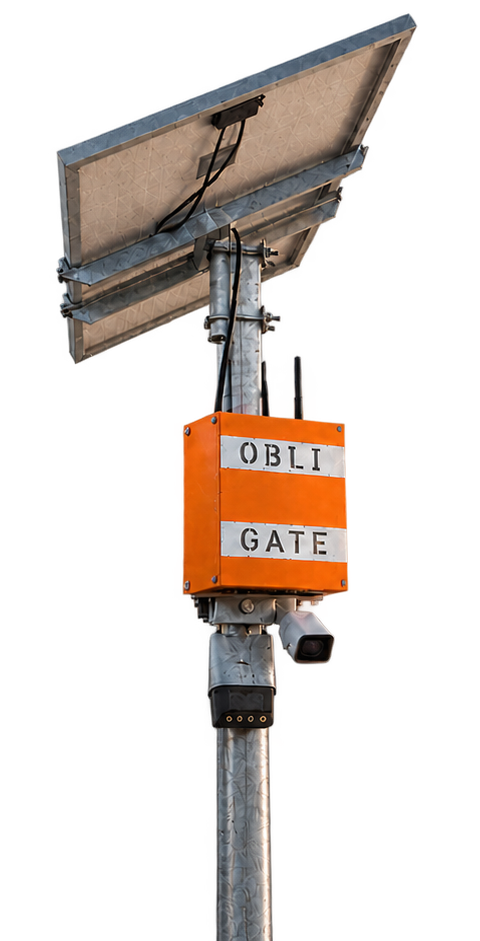
The software checks every vehicle against the commitments, including permits, washdown status and any other agreed obligations. It runs on solar power and Starlink, with no crew on site.
Both sides hear about a discrepancy straight away, with time to put it right before a small incident does lasting damage to the relationship. The first alert is a phone call, not a penalty.
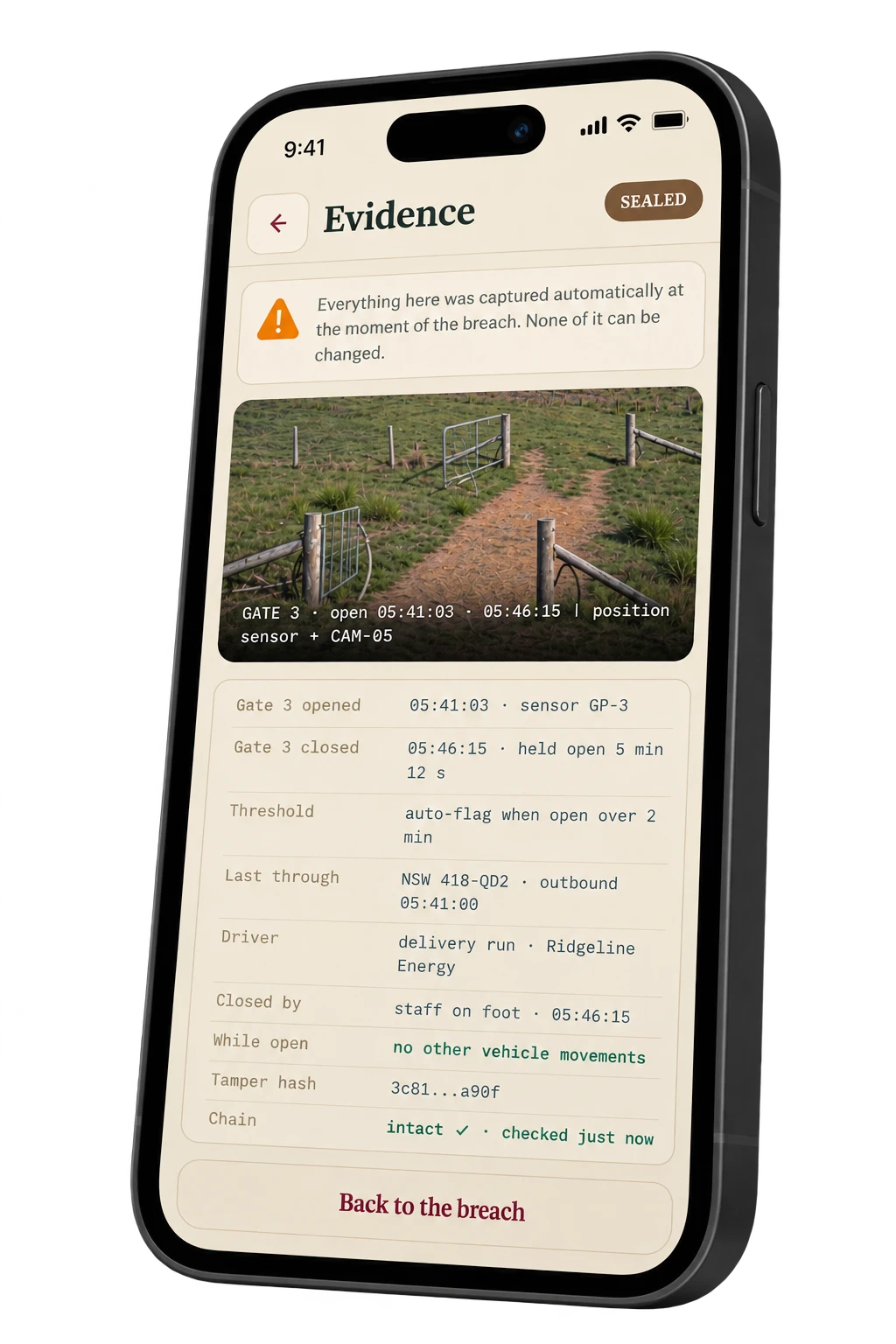
Every event, fix and outcome is sealed into a tamper-proof record. Over the life of the project it becomes a track record, so disputes are settled by evidence instead of memory.
A single day of delay on a project costs more than OBLIgate costs for a whole year. One avoided day roughly covers year one.
Records are pseudonymised and can only be read by assigned users under set conditions, so they can't be used to target anyone.
A group of hosts, developers and contractors shapes the remedies, so the first alert is a phone call, not a penalty. OBLIgate is a safety net, not a stick.
OBLIgate comes in at the contract stage, so the clause is there from day one and becomes the default, rather than another system bolted on later.
The core clause is standard. Remediation and site rules are tailored to each property during the negotiation.
We're partnering with developers, hosts and contract negotiators ahead of the 2027 rollout. Leave your email and we'll be in touch.